Cicadas are a type of insect. There are multiple species of cicada, and scientists put all species of cicada in the family Cicadoidea. Cicadas are related to aphids, leafhoppers, bed bugs, and other so-called “true bugs” in the order Hemiptera.
Cicadas spend most of their lives underground feeding on plant matter with their mouthparts; in this stage of a cicada’s life it is known as a nymph. Nymphs are young cicadas which have yet to become sexually mature. Cicadas can be grouped into two types based on how long they spend as nymphs: Annual cicadas, and periodical cicadas.
Annual cicadas are the most common type of cicada. Annual cicadas include many different species and genera (singular: genus; a group of closely-related species) and are found on all continents except Antarctica. Annual cicadas come out every Summer as mature adults of their species.
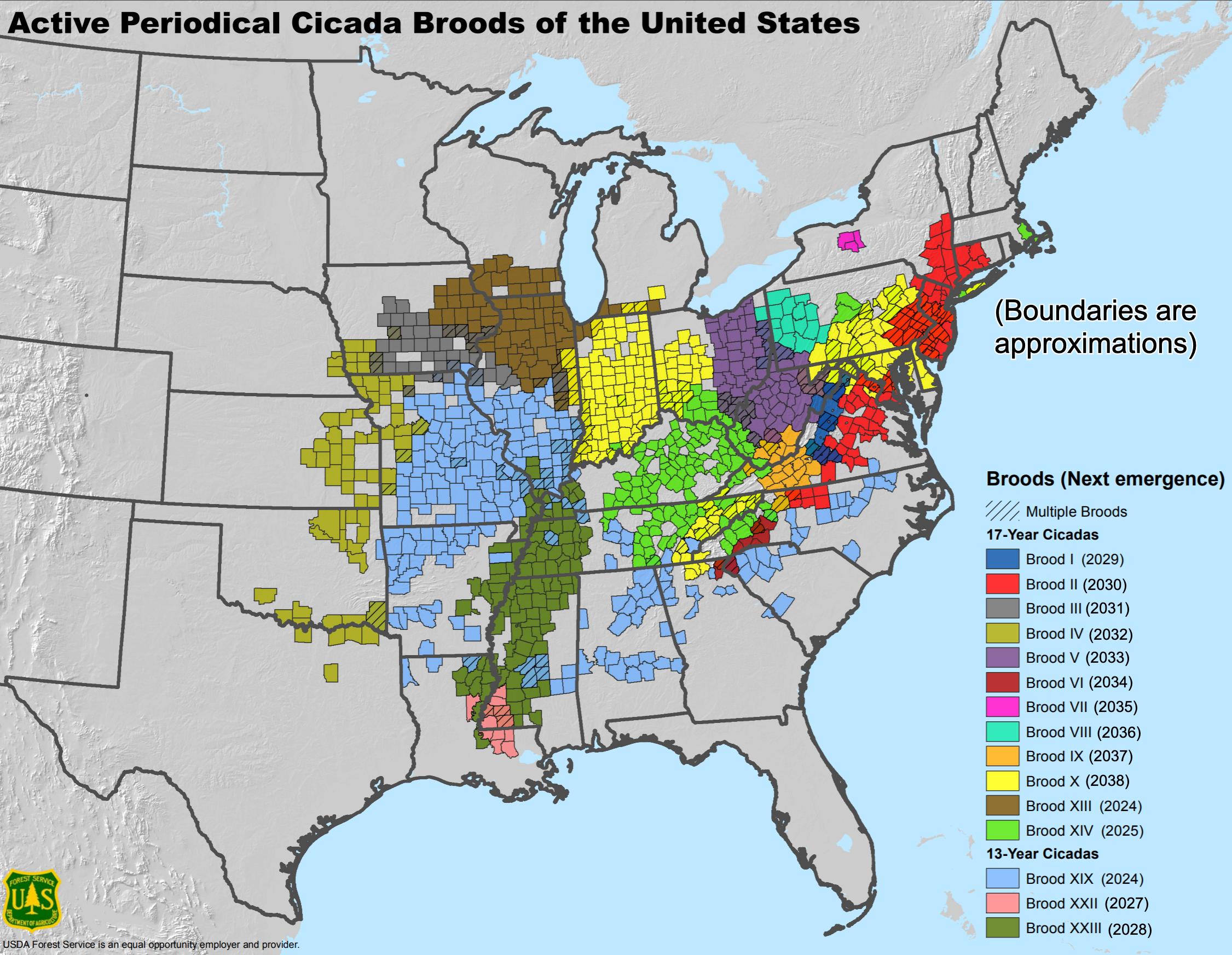
Periodical cicadas are found in Eastern North America, and come out as sexually mature adults every thirteen to seventeen years. The periodical cicadas of North America can be grouped into fifteen broods, and each brood appears regularly in a particular region of Eastern North America. The members of each brood come out as mature adults in the same year as other members of their brood. Periodical cicadas are members of the genus Magicicada.
Cicadas are edible, and are even considered a delicacy (very tasty food) in parts of China.
Cicadas are important in culture and mythology wherever they are located.
Esl